Learning outcomes
By the end of this lesson, you will be able to:
- State in plain language what an antenna is and what it does in a radio system.
- Explain why antennas matter to operators and engineers in the Air Force mission set (comms, radar, EW, SATCOM, GPS).
- Identify the five modules of ECE 444 and how they build toward the final capstone.
- Recognize several real antennas by sight and connect their geometry to the job they do.
Welcome & introductions
Instructor and student introductions — background, career interests, prior exposure to RF or radar.
About your instructor
Lt Col Neil Rogers, USAF (Ret.) — BS from TU; MSEE and PhD from AFIT. Currently the Erdle Chair at USAFA and a Field Applications Engineer at Analog Devices.
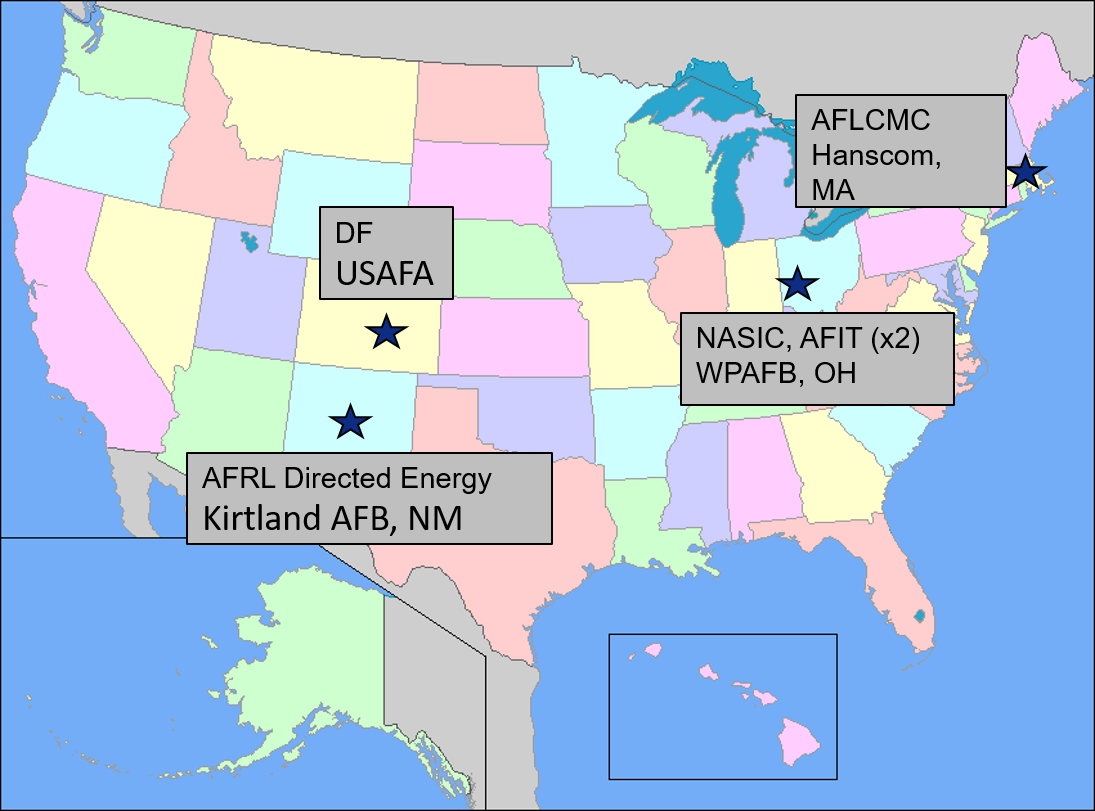 DF/USAFA · AFRL Directed Energy, Kirtland AFB · NASIC and AFIT (×2), WPAFB · AFLCMC, Hanscom AFB.
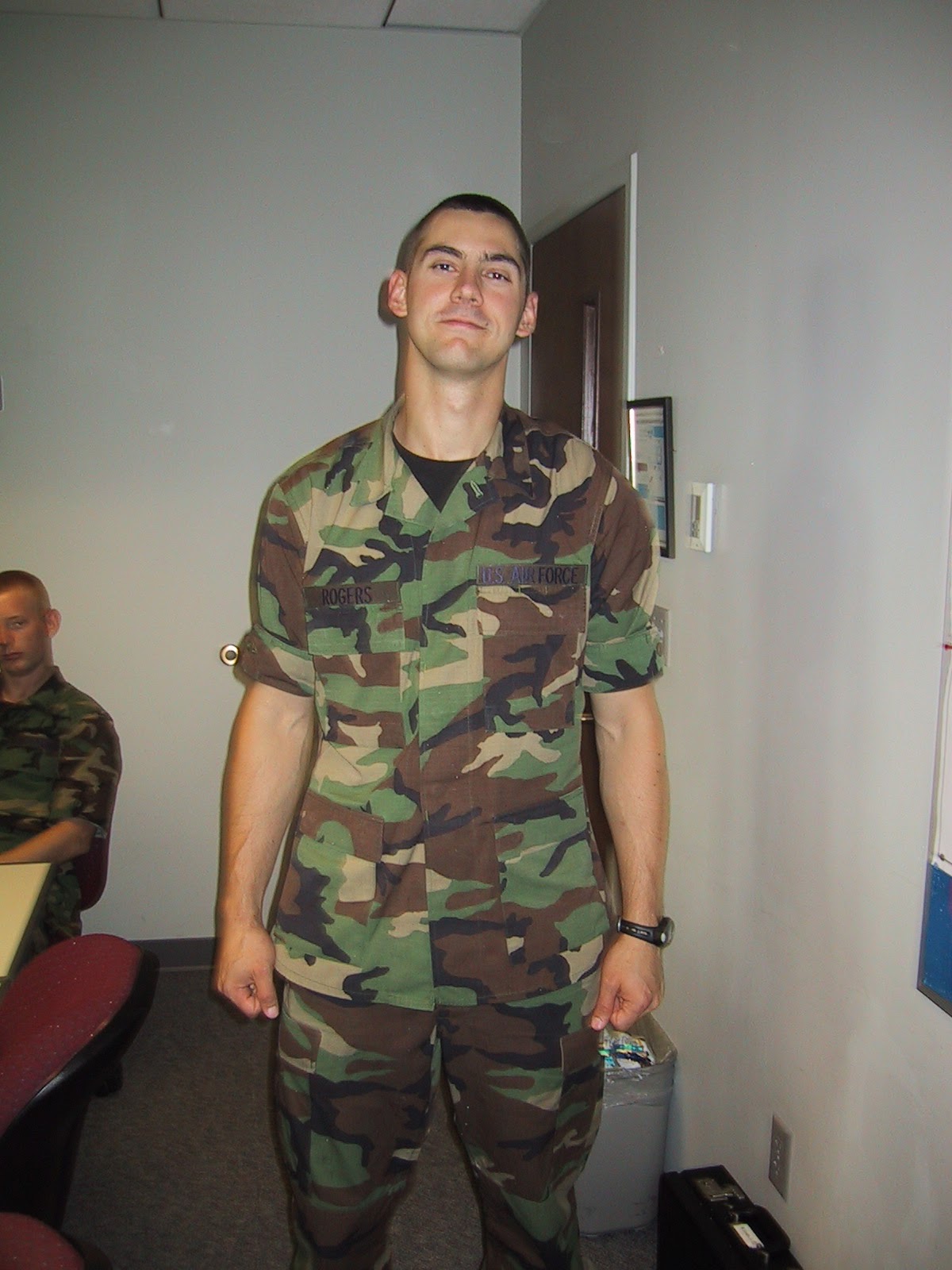 Officer Training School — where it started.
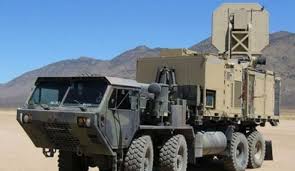 Active Denial System 2 at AFRL Directed Energy. Section chief for Active Denial and High-Power Sources.
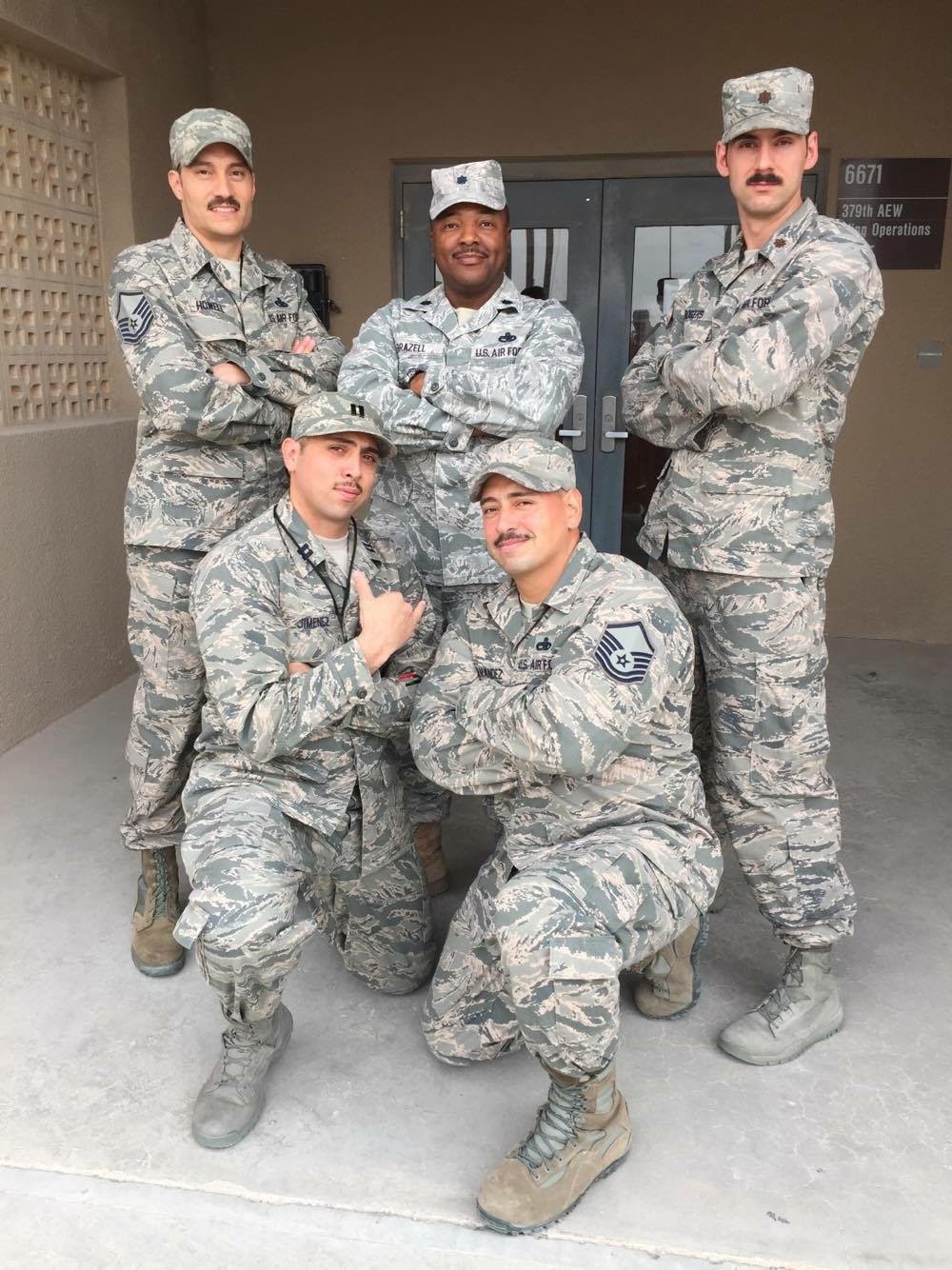 Deployment with the 379th AEW.
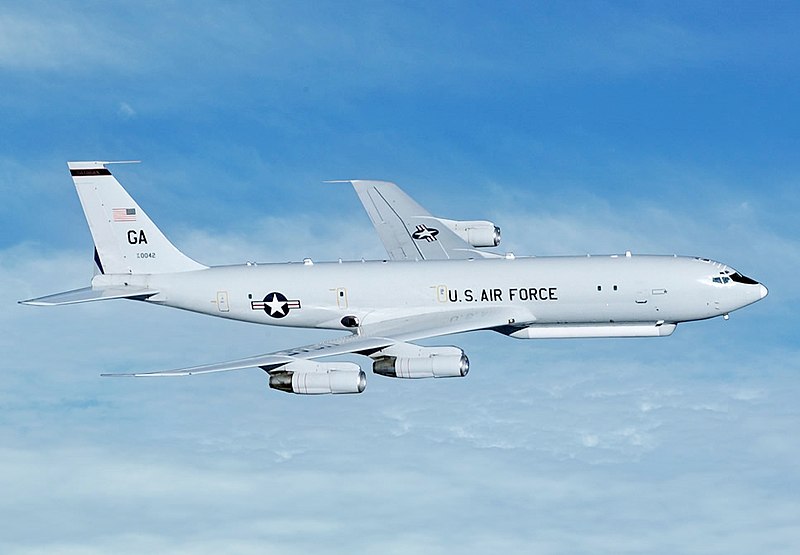 E-8C Joint STARS — airborne ground surveillance radar.
 Directed the Academy Center for UAS Research (ACUASR) at USAFA through 2025.
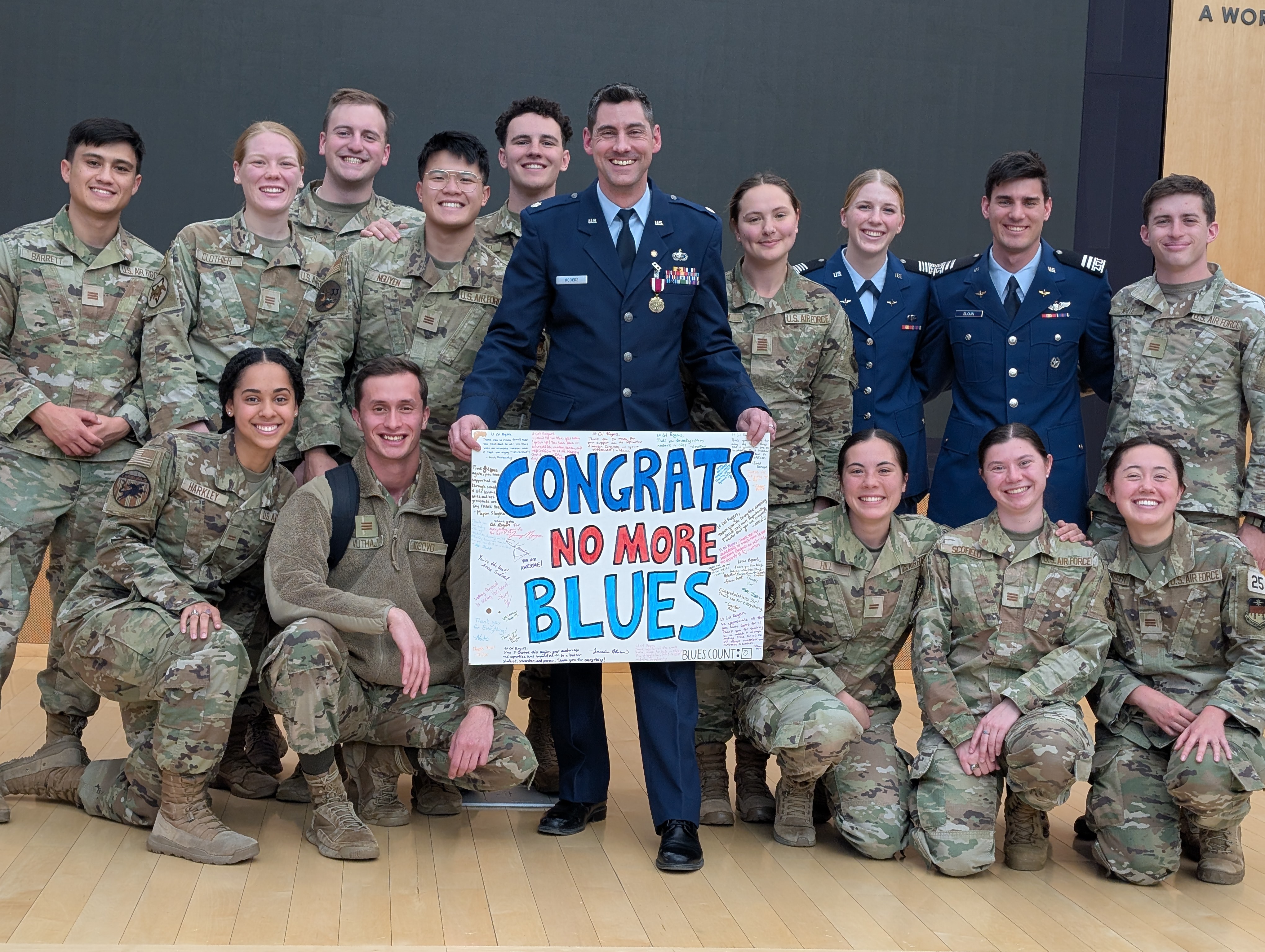 Retirement from active duty — cadets sent me off with “No More Blues.”
Today my day job with Analog Devices puts me shoulder-to-shoulder with the team designing the ADALM-PHASER you’ll use in Module 3.
 Field Applications Engineer at Analog Devices — the folks who make the ADALM-PHASER.
Outside the lab
 Four kids (ages 11, 13, 15, 17). We just moved into a new house — fixing it up is a running hobby.
 CrossFit.
 Playing guitar with the band at Trace, my church.
How I teach
- We’re learning this together. I don’t have all the answers, and I’ll say so when I don’t.
- Mistakes are part of learning. Make them cheaply, and make them count.
- Ask questions. There is no such thing as a dumb question — if something isn’t clicking for you, it’s almost certainly not clicking for someone else.
What is an antenna?
An antenna is the transducer between a guided electromagnetic wave (a signal traveling on a cable or waveguide) and a freely propagating wave (a signal traveling through space). Every wireless system on Earth has at least one on each end of the link.
Two ideas we’ll keep coming back to:
- Antennas are reciprocal — the same antenna transmits and receives with the same pattern.
- Antennas do not create energy — they shape where the energy goes.
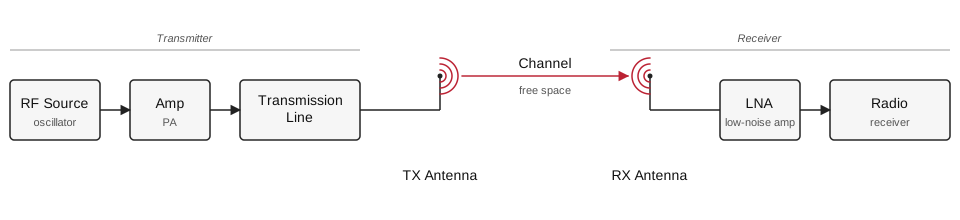 A generic RF link. The antennas are the only components that touch free space; everything else is guided-wave.
Why this matters to you
Antennas are the front door of every RF system the Air Force fields. If the antenna is wrong, nothing downstream can fix it.
- Communications — HF/VHF/UHF/SATCOM links, tactical radios, data links.
- Radar — surveillance, tracking, targeting, weather, altimeters.
- Electronic warfare — direction finding, jamming, protection.
- Navigation — GPS, TACAN, ILS, IFF.
- ISR — SIGINT payloads, synthetic aperture radar.
By the end of this course you will have designed, measured, and steered real antennas — the same class of hardware sitting on the aircraft, satellite, or ground station you may one day operate or specify.
Course roadmap
Five modules, forty-one lessons, culminating in an integrated beamforming + radar capstone:
| Module | Focus |
|---|---|
| 1 | Foundations of Electromagnetics and Antennas |
| 2 | Antenna Types, Simulation, and Measurement |
| 3 | Arrays and ADALM-PHASER Beamforming |
| 4 | Radar Fundamentals and FMCW |
| 5 | Final Capstone Project |
See the syllabus for the full schedule and both project descriptions.
Show & tell — real antennas + SDR
Bring in a set of physical antennas (dipole, monopole, patch, horn, Yagi, small array) and demonstrate reception with an SDR (RTL-SDR / HackRF / Phaser) tuned to a live signal. Discuss what students see on the spectrum as antennas are swapped.
Hardware checklist: _TBD_
Demo — acoustic beam pattern
Live demonstration of a small speaker array driven by a multi-channel audio interface, showing how phasing multiple sources produces a directional acoustic beam. Serves as an audible, tangible analog for the phased-array behavior we’ll formalize in Module 3.
See the acoustic antenna simulator concept for the build plan.
Preparing for L2
Read the assigned sections on field regions before the next class — we’ll formalize the boundary between the reactive near field, radiating near field, and far field, and connect these regions to how (and where) antennas are actually measured.
Slides: present · print PDF · raw markdown